Anybody who is even slightly interested in bushcraft, survival, wilderness living, etc. has probably heard of Dave Canterbury. He runs The Pathfinder School and has been one of the forefathers as far as mainstream survival and bush-living is concerned and has written several books on the subject. Something that he has taught has been what he calls the Five C’s of Survival. These are five items that are needed in a survival situation that would be the hardest to recreate from nature. They are Cutting Tool, Combustion Device, Cover, Container, and Cordage. I’ll do my best to talk about each one and give my experiences with them.
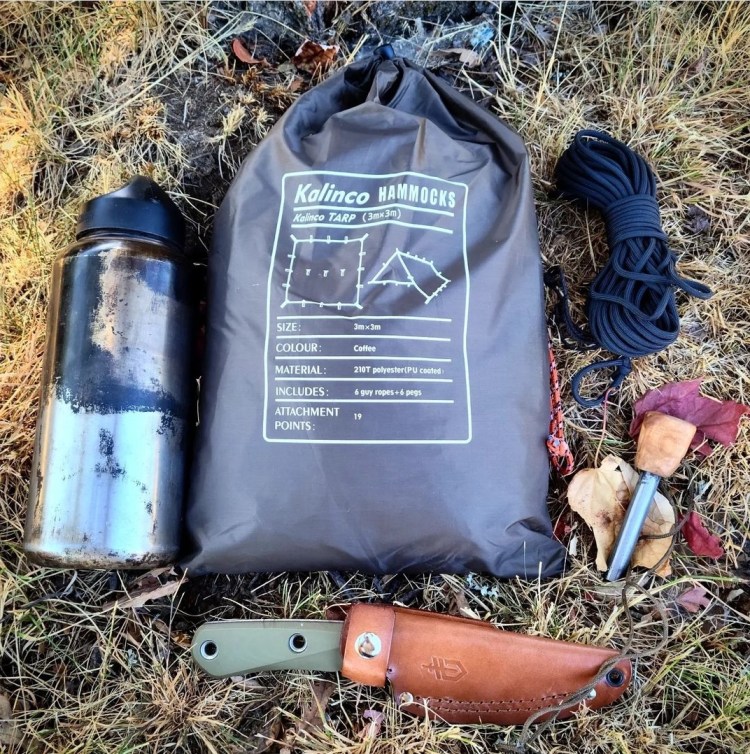
Cutting Tool
“A well trained person needs only a knife to survive.”
Mors Kochanski
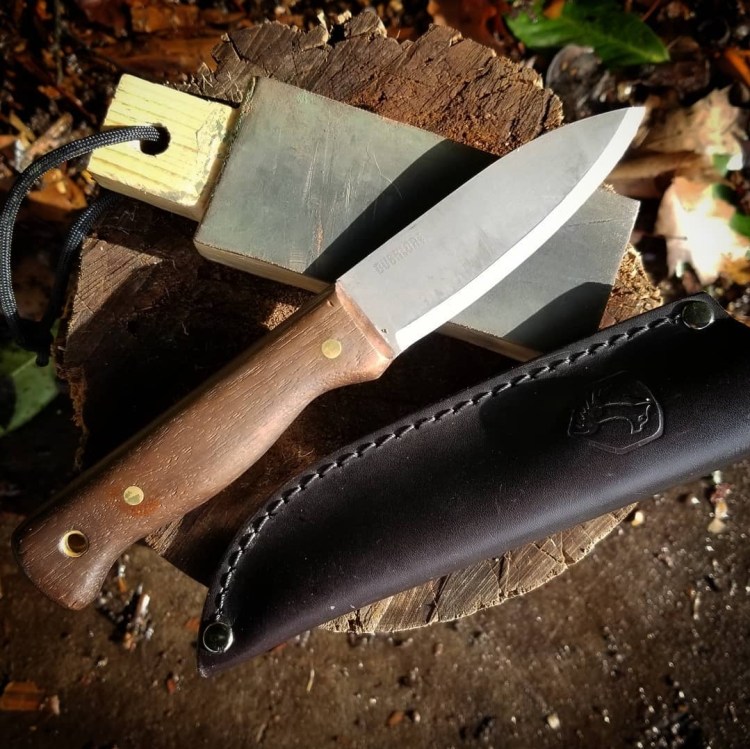
I always carry a knife. Always. I use a blade every single day. Now that said, a cutting tool can also be an axe, a machete, a saw, etc. For everyday purposes, however, a knife is the most convenient for me to always have on me. A cutting tool is essential for cutting cordage, chopping wood, camp chores, food prep, wild game processing, wood carving tools and utensils, etc. And being that a cutting tool is usually a hard, sharp piece of metal it is really difficult to recreate in a wilderness setting. Sure, you could make a knapped rock blade of some sort. Or, you could grind down bone on rock to get a sharp edge. These both take skill and time. This is why a proper full-tang bush knife usually fits the bill.
Combustion Device
“The arts of fire-building are not so simple as they look.”
Horace Kephart

The ability to start a fire is paramount to ones survival in the woods. You will have a very difficult time without one. Warmth, cooking, and protection from wildlife are just a few examples to fire’s importance. You must be able to start a fire effectively. This is why a Combustion Device is on the list. This could be anything from a ferrocerium rod, flint and steel with charred material, or even the tried and true Bic lighter. You also need to familiarize yourself with each implement and practice actually building fires. You need to learn what kindling to use and how to maintain your fire once it’s going. And, yes, you can learn to start a fire using primitive skills like a bow drill set or a hand drill. These are invaluable skills to have but in a survival situation you may not have the materials or time to produce an ember in this way. That’s why I always have at least a Bic in my pocket.
Cover
“…a place of rest is essential to health and comfort through the long, cold November night.”
George W. Sears (Nessmuk)
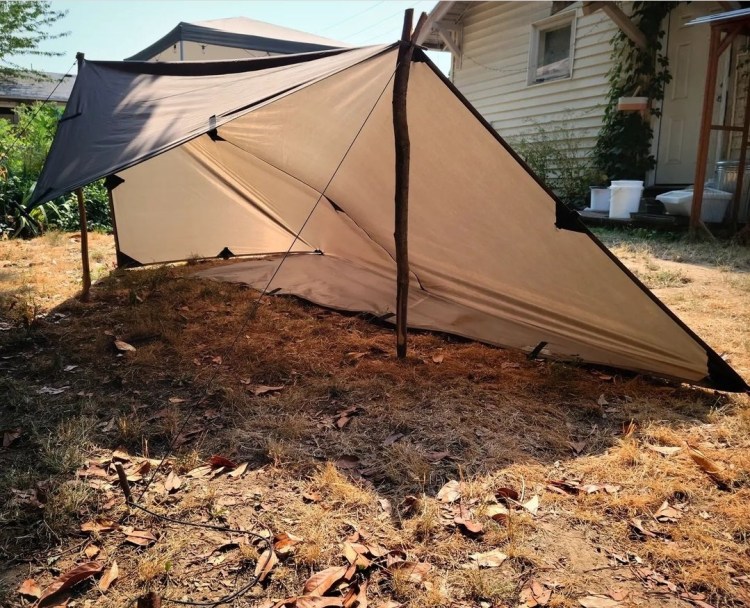
Cover is the next “C’ on the list. This can mean anything from a tarp to keep the sun and rain off you or simply the clothes on your back. It’s something to keep a barrier from you and the elements. I’m generally dressed for the climate I’m in and I almost always have some sort of emergency shelter with me. Even if it’s as simple as a space blanket and a poncho. Typically, if I’m going out for a day in the woods, I’ll carry a 5×7 tarp and a quick deploy ridge-line. I’ve practiced setting up a simple lean-to shelter in adverse conditions and can be out of the rain in under two minutes.
Container
“All such vessels should be low and broad; then they will boil quickly and pack well.”
Horace Kephart
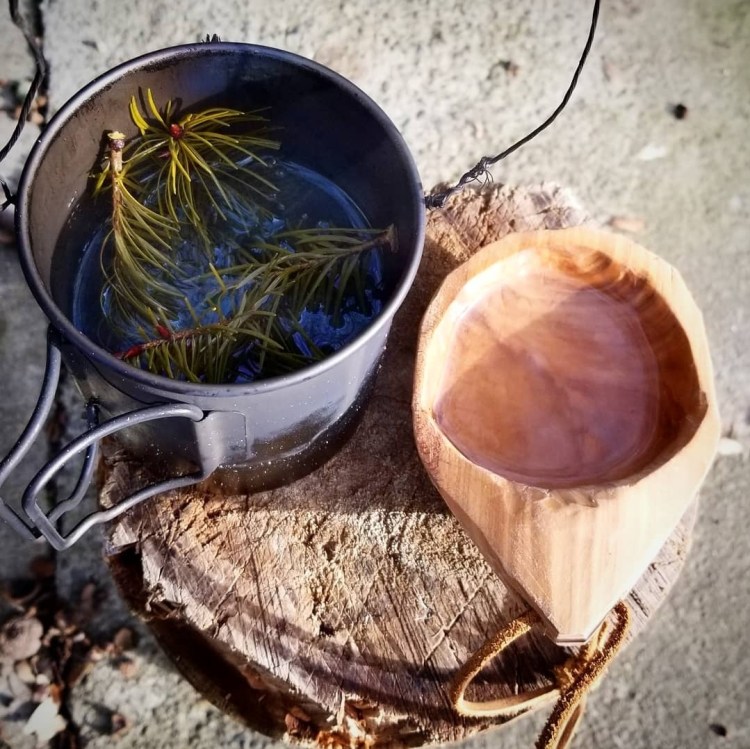
The ability to purify and safely drink water is a must for any survival situation. The best, sure-fire way to do this is to boil water in some sort of container. Of course there are ways to do this with natural material. For instance, I’ve used coals from a fire and burned out a bowl in a log which I could fill up with water. I could then heat up rocks in the fire and place them in the water with bush crafted tongs and boil water this way. But, I’m not betting my life on it. I carry a simple stainless steel bottle and usually a nested cup with it. You must make sure your bottle is single walled, however. Otherwise, the water won’t boil.
Cordage
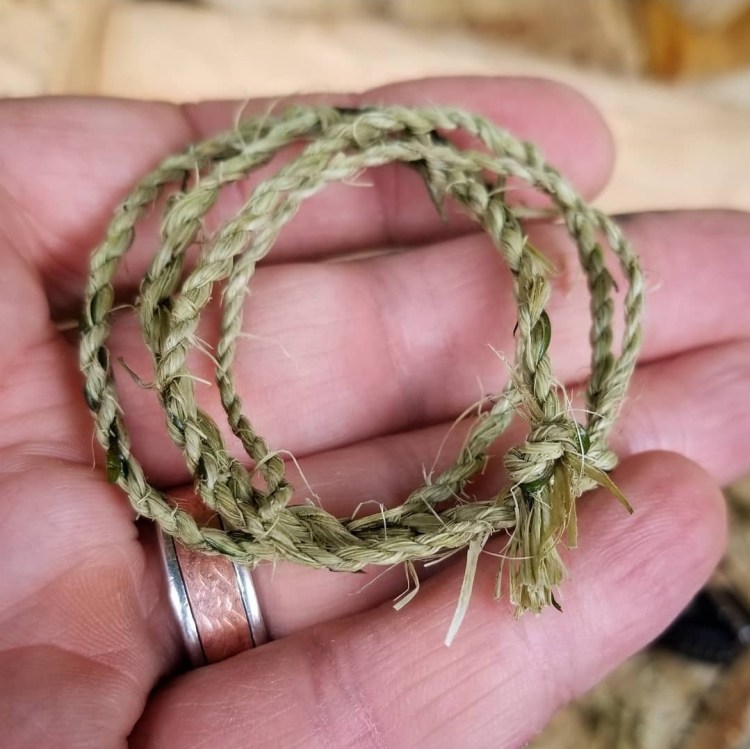
“Ensure that any cordage is multi-ply so that it can be broken down into smaller fibers”
Dave Canterbury
The last item on our list is cordage. Rope, jute twine, bank line, 550 paracord, etc. They all have their benefits and drawbacks. For this conversation I’m going to focus on paracord as it is probably the most accessible for most people and can be used for a variety of functions. Not only can you use it for lashings and bindings but you can take out the inner strands which can be used for sewing, first aid, net making, and other things which require a thinner strand. I usually carry about 30ft with me for most outings. You can certainly make cordage from nature. In fact I actually really enjoy making cordage. I’ve spent countless hours reverse wrapping yucca fibers until my fingers bled. The thing is, though, it takes a lot of time. Plus, you need the right materials. You may not have either when the time comes.
Get Out There!!
It’s one thing to academically know something and another thing to apply that knowledge and do something with it. I recommend getting a Five C’s Kit together and going outside. Practice using these things. Set up a simple shelter. Make a fire. Boil some water for coffee or tea. Carve a spoon. The more you familiarize yourself with these things the better off you’ll be for future adventures.
 Nees Bushcraft
Notify
LikeLike