I’ve always enjoyed having a campfire. Having the right kit with you ensures that you can safely and efficiently start a fire. Learning different techniques can help you to be more effective in different weather conditions. I’ll go through each item in my fire kit. The things I carry work for me. Something else might work for you.
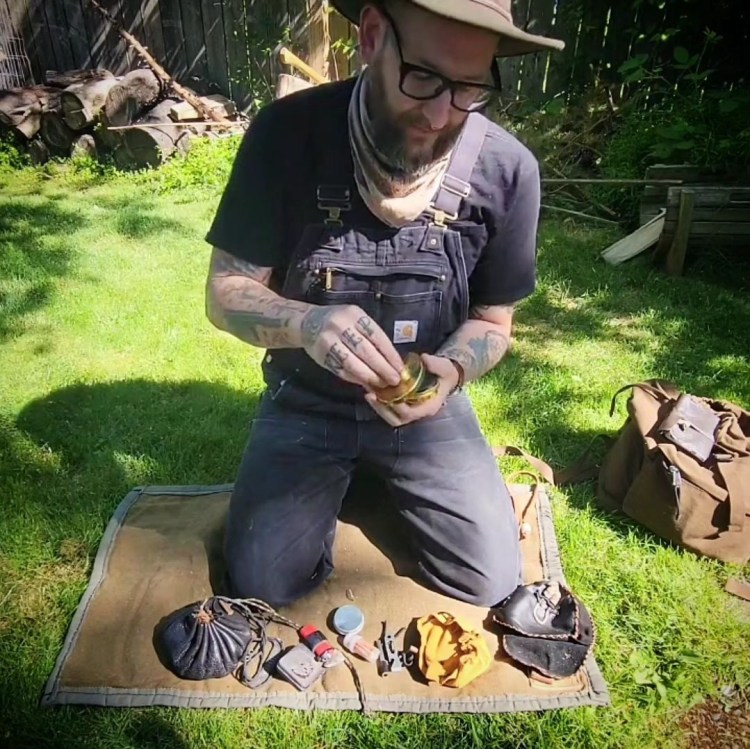
Tinder Pouch
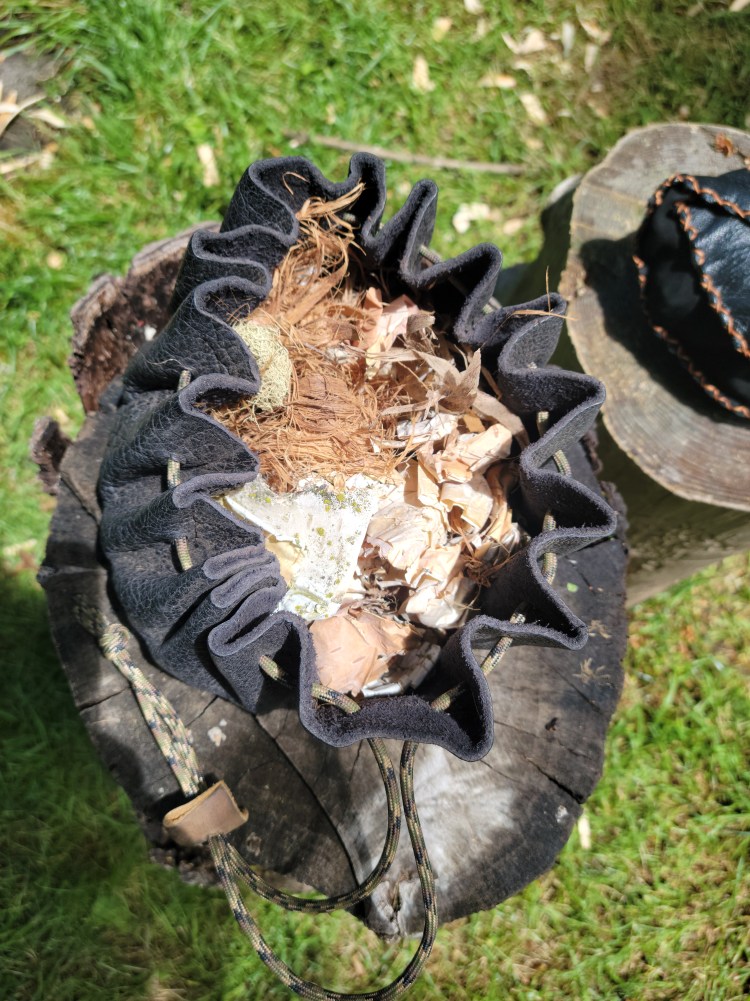
I made this tinder pouch out of some scrap leather and paracord. I keep it full of dried grasses, inner bark from trees, jute, dried moss, etc. This ensures I always have tinder material for helping to start a fire, even if the elements aren’t ideal.
Bic Lighter
This is probably the easiest and most reliable way to start a fire. Flick the Bic and you have a flame pretty much ever time. I always have one in my pocket, in my vehicle, and in my backpack. This one I keep in my kit with some Gorilla Tape on it. I also keep a zip-tie around the top of the lighter under the fork (the part you press down to open the fuel valve) so it doesn’t accidentally release fuel, ensuring it’ll be at the ready when needed.

Flint and Steel

A flint and steel striker, along with some char cloth (shown next), is a fun way to get a fire started. It takes practice but this has been a time tested technique for the last nearly 3000 years.
Char Cloth
In order for flint and steel to be a viable fire making option you need charred material to catch a spark. Therefore, having pre-made char-cloth in a small tin is important. I find denim from old blue jeans to work the best for making this.
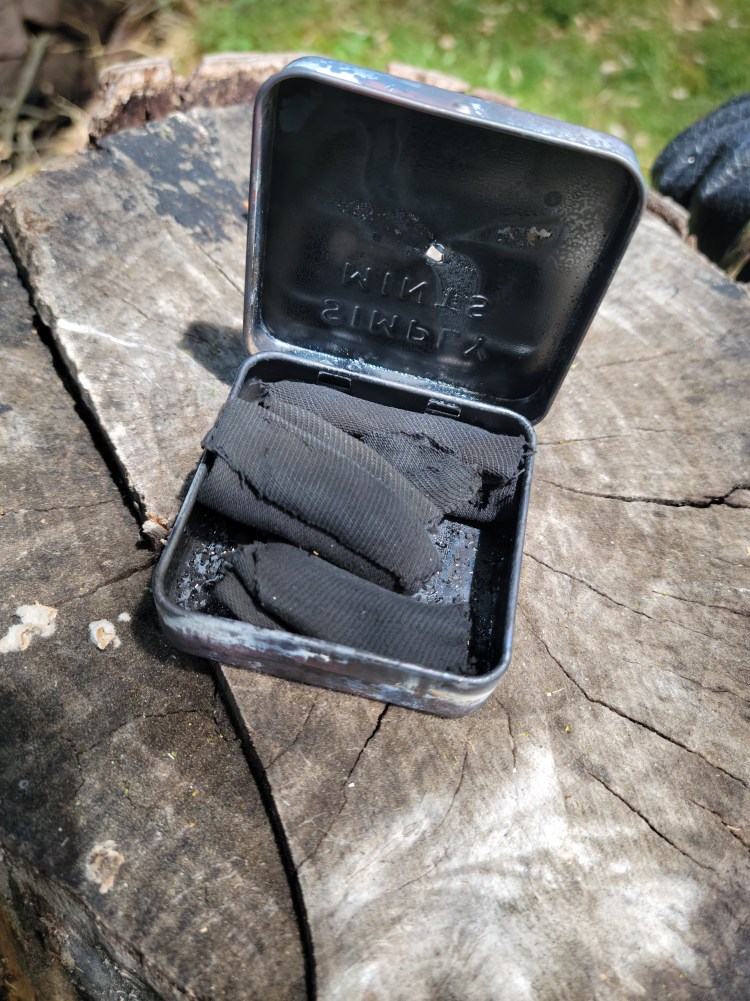
Hudson Bay Tobacco Tin

The Hudson Bay tobacco tin has been used by mountain men, trappers, and the like for a long time. This modern day replica was a gift and it’s one of my prized pieces of kit. The lid has a magnifying lens which can be used for solar ignition. I keep extra fatwood, birch bark, and jute twine inside.
Stormproof Matches
Sometimes it just feels right to strike a match and gently let the flame ignite some tinder. I like these UCO survival matches. They come in a waterproof container and with cotton for helping a fire get going. They also stand up do adverse conditions quite well.

Ferrocerium and Striker
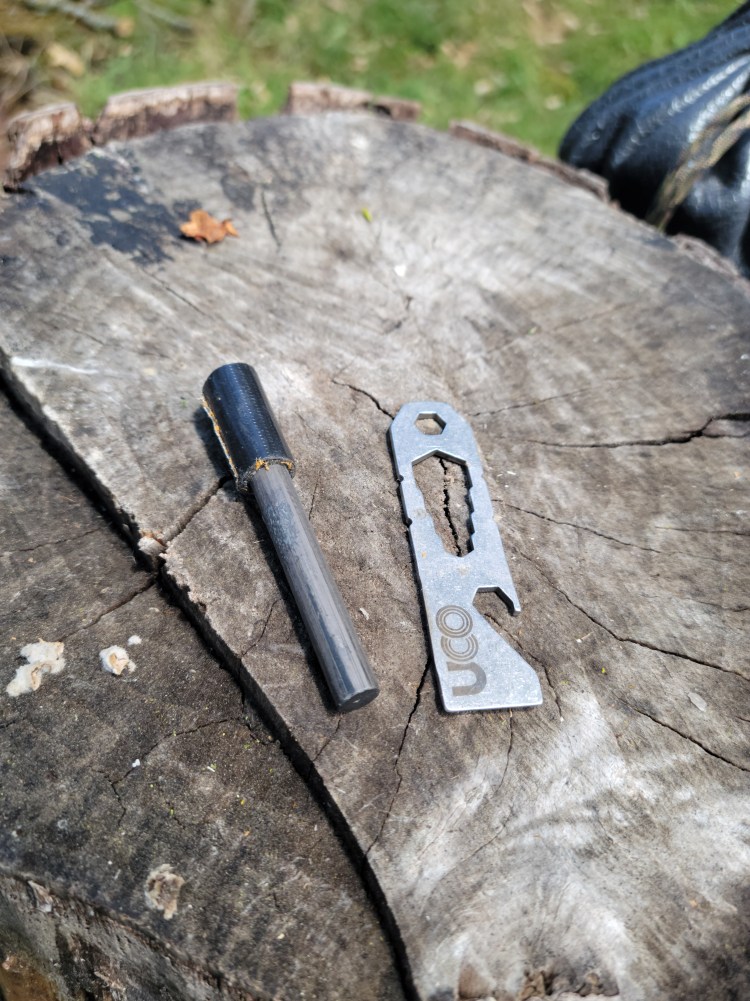
I always have a large ferro rod either on my person or in an easily accessible pocket of my pack. This small one is just a back up. The end is wrapped in Gorilla Tape which I should mention can be used as a fire extender. Even a small ferro rod like this one has thousands of sparks to throw in its lifetime.
Waxed Paracord
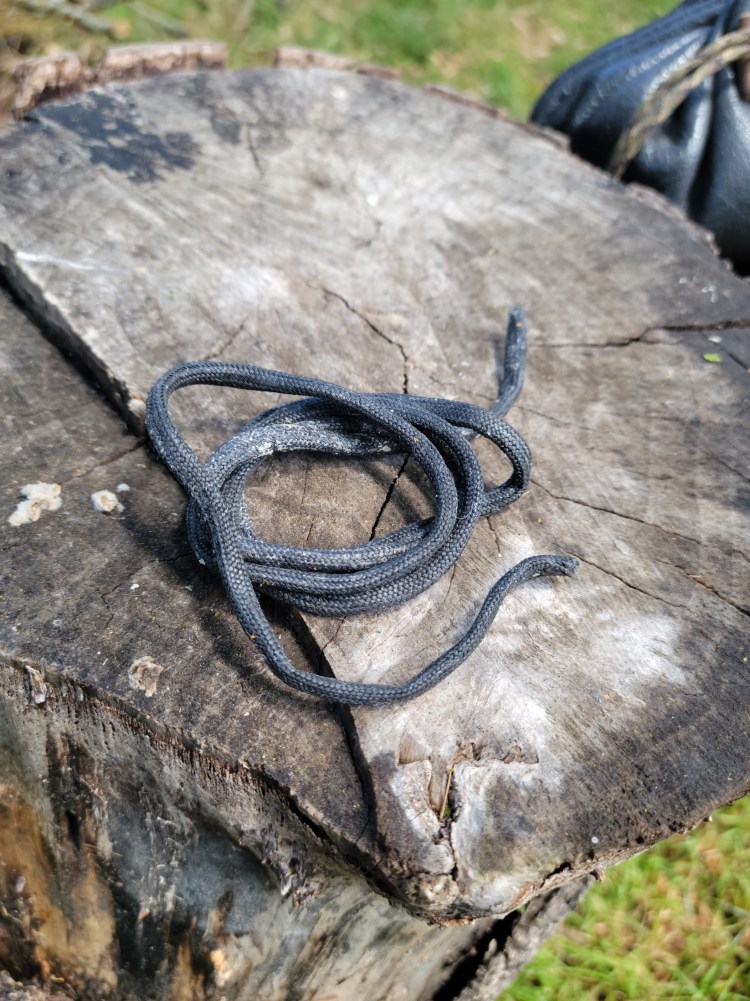
There are few things which are as rewarding and primal as rubbing two sticks together and creating an ember. Having some waxed paracord on hand allows for an easily made bow for a bow drill set. The wax helps the spindle to stay locked in place by the bowstring.
Make It Your Own
Building a fire kit is a personal endeavor. Just because some things work for me doesn’t mean it’ll work for you. Practice with different techniques in different weather conditions. I once spent the better part of three hours on a wet and snowy camping trip trying to get a fire going because I thought I’d be ok with a couple of Vasoline soaked cotton balls and a Bic. It was miserable. Ever since then I decided I’d never be caught unprepared. I continue to practice and learn knew approaches. Be safe and get outside.


 Nees Bushcraft